Jul 09, 2026
Strategy Bulletin Vol.403
Is It Happening!? The Great Revival of Japan’s Semiconductor Industry
~Kioxia’s No. 1 Market Capitalization as a Sign of Things to Come~
With the stock prices of global semiconductor memory companies soaring, market attention is focused on a single question: Is Kioxia’s status as Japan’s No. 1 company by market capitalization merely a bubble, or is it a harbinger of a larger historical shift? Which hypothesis is most likely to convince the market?
Three historical factors underline Kioxia’s rise to the top in market capitalization. Musha Research believes the following three hypotheses are highly plausible.First, humanity is undergoing the AI Revolution, the third economic revolution following the Agricultural and Industrial Revolutions. Second, the bottleneck of the AI Revolution lies in hardware; the extreme supply-demand imbalance in semiconductors is a manifestation of this and will not be easily resolved. Third, Japan occupies a central position in the global semiconductor ecosystem, and this position will continue to strengthen. If these hypotheses can be confirmed, Japan’s future looks bright.
Furthermore, the intensifying U.S.-China rivalry and the Takamasa administration’s sound economic policies will serve as the driving forces to bring these three historical conditions to fruition.
(1) A Major Transformation in the Semiconductor Industry for the First Time in 30 Years
The History of Semiconductors: Marked by the Transience of Prosperity
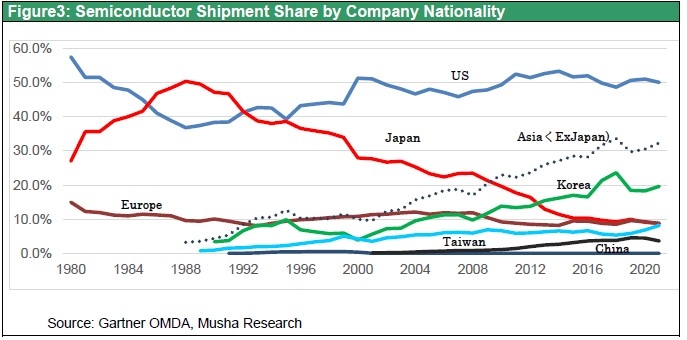
In the global semiconductor competition, Japan is facing a once-in-30-years opportunity for a dramatic turnaround. Looking back at the history of the semiconductor industry, we see that there are no perpetual winners; rather, it has been marked by the impermanence of “what goes up must come down.” In the 1980s and 1990s, the United States—the pioneer in semiconductor development—was overtaken by emerging Japanese companies, and from the late 1990s through the 2000s, the Japanese semiconductor industry, in turn, was defeated by U.S. efforts to undermine Japan and the relentless pursuit of South Korean and Taiwanese competitors. In the 2020s, even Intel—the former global semiconductor champion—plunged into massive losses, and today, NVIDIA and TSMC, both founded by Taiwanese entrepreneurs, reign as industry leaders.
Figure 1: Humanity’s Three Major Economic Revolutions
Figure 2: The Semiconductor Industry in a Period of Dramatic Change Due to the AI Revolution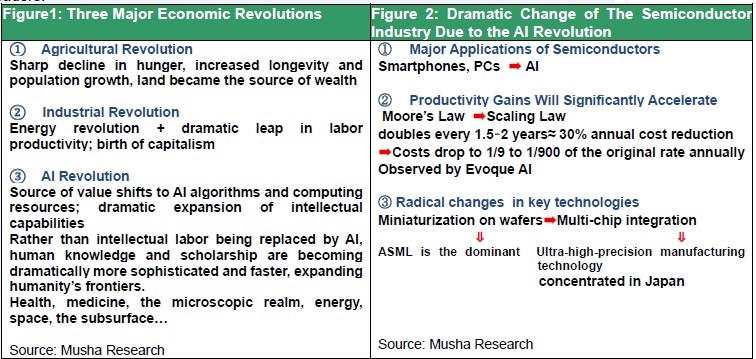
Figure 3: Semiconductor Shipment Share by Company Nationality
Why do the mighty inevitably fall? It is because technology, demand sectors, and ecosystems continue to evolve and shift, causing the criteria for success to change. Many of the technological breakthroughs that occur from time to time did not lie along with the extension of conventional approaches. Furthermore, semiconductor demand sectors and customers have also shifted. Additionally, the ecosystem supporting the semiconductor supply chain has changed, leading to shifts in optimal business models and corporate locations.
Because the semiconductor business is so dynamic, it can be said that constant renewal has always been required.
A Period of Major Transformation in the Semiconductor Industry
It is rare to find a time when the conditions for “what goes up must come down” are as aligned as they are now. First, the demand for semiconductors is rapidly shifting from traditional PCs and smartphones to AI. Second, the pace of productivity improvements in systems involving semiconductors has changed dramatically. Third, semiconductor structures and key technologies have undergone drastic changes.
Figure 4: TSMC’s Projected Wafer Input by Customer for Cutting-Edge Devices
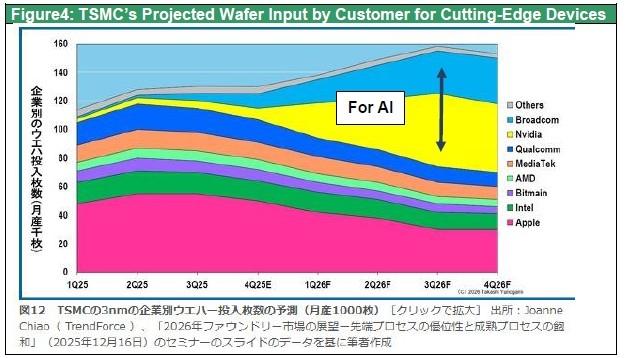
Figure 4, prepared by Takashi Yunogami, shows the trends and projections for TSMC’s wafer input volume for its cutting-edge 3-nanometer devices by customer. It reveals that over the past year, input for Apple—formerly the largest customer—has declined significantly, while wafer input for NVIDIA and Broadcom, both believed to be for AI applications, has surged. Although these figures are based on volume, considering the substantial price disparity, it appears that AI applications account for the majority in terms of value.
The second shift in productivity growth is even more dramatic. The phenomenal development of the information society over the past 50 years—including the convergence of communications and computing and the emergence of the Internet—has been driven almost exclusively by Moore’s Law (the exponential decline in semiconductor technology costs as technology advances). This represents a remarkable technological evolution in which the density of transistors on a chip doubles (and costs are roughly halved) every 18 to 24 months. At this very moment, when concerns are growing that Moore’s Law is entering a mature phase and slowing down, AI has emerged. Technological progress and cost reductions driven by AI are demonstrating performance improvements that far exceed those of Moore’s Law.
An empirical rule known as the “scaling law” is used as a metric to measure technological progress in AI. The view is that what determines productivity gains in AI is the scale of inputs. These input resources consist of three elements: (1) the volume of training data, (2) the size of the model (i.e., the number of parameters), and (3) computational resources (the computing power of a data center or the number of NVIDIA AI chips installed). The theory holds that as each of these is scaled up, technological progress in AI will continue. The speed of this progress is astonishing. The U.S. research organization Epoch AI reports that the processing cost required for AI to generate text or images—measured per token (the smallest unit of text, such as a question or response)—continues to decline at a rate of one-ninth per year for the smallest models and one-nine-hundredth per year for the largest models. Since cost reductions under Moore’s Law occur at an annual rate of 30% (approximately 1/1.4), this means that AI costs are falling at a rate of 6 to 600 times faster.
Shift in Key Technologies to Back-End Processes and Packaging
Third, key semiconductor technologies have undergone a major shift. Until now, miniaturization on the wafer was the key, and lithography technology was paramount; consequently, ASML—a leader in extreme ultraviolet (EUV) lithography systems—was the most critical equipment supplier. However, as miniaturization has reached its limits, packaging technology—which integrates multiple chips—has become the bottleneck. In the field of AI, in particular, TSMC’s proprietary 2.5-dimensional packaging technology, CoWoS (Chip on Wafer on Substrate), has become a bottleneck.
Furthermore, the next-generation technology essential for reducing power consumption, CPO (Co-Packaged Optics, or optoelectronic integration), requires semiconductor switching chips and optical communication components to be integrated within the same package.
Specifically, for CPO (Co-Packaged Optics), which is key to power efficiency, packaging that integrates the semiconductor chip (acting as a switch) and optical communication components into a single package is required.
Consequently, Japan—which boasts a 50% global market share in materials and holds a strong position in semiconductor back-end equipment—is at an advantage. In fact, when developing CoWoS, TSMC established its first overseas research facility at AIST in Tsukuba (2022), and Samsung has also opened a development hub in Yokohama.
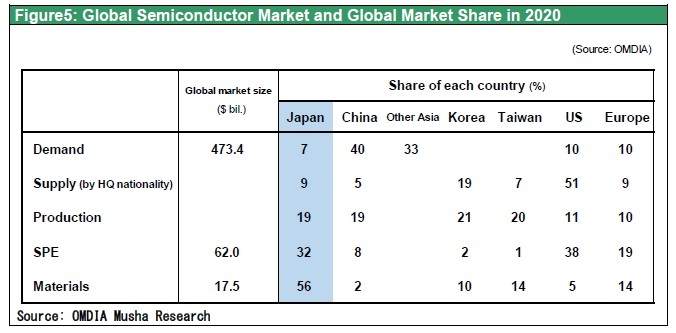
Figure 5: Global Semiconductor Market and Global Market Share
Is Japan Still the Hub of Global Semiconductor Integration!?
Thirty years ago, Japan was the hub of global semiconductor integration. It provided an end-to-end supply chain, from materials, components, and manufacturing equipment all the way to finished products. However, U.S. pressure on Japan and the extremely strong yen nearly wiped-out Japanese semiconductor manufacturers. Looking at the number of companies by nationality in the global top ten semiconductor firms, Japan had 3 companies in 1980, 5 in 1990, 3 in 2000, 2 in 2010, and none since 2020. Today, the only major semiconductor manufacturers remaining in Japan are Kioxia, Micron Technology’s Hiroshima plant, Sony, and Renesas. However, Japan maintains a high market share of 50% in semiconductor materials and 30% in equipment, and it can be said that Japan has continued to secure its position as a hub within the world’s largest East Asian semiconductor cluster (South Korea, Taiwan, China, and Japan). With the addition of TSMC’s Kumamoto plant and Rapidus’s Chitose plant, a trend toward an increase in Japan’s share of semiconductor production has begun. The Takaichi administration has placed AI semiconductors at the top of its 17 growth strategy sectors and has announced an investment of 68 trillion yen by 2040.
Japan is the country with the most diverse range of technological elements in the world and excels at creating new materials for hardware. Figure 7 shows Harvard University’s Complexity Ranking, in which Japan has maintained the No. 1 position since the 1990s. The complexity index indicates the extent to which each country specializes in diverse and advanced products, serving as a measure to compare the knowledge-intensity of national economies. A high ratio indicates a high level of intellectual expertise, suggesting a strong potential for pioneering cutting-edge technologies.
Figure 6: Economic Complexity Ranking (Harvard University)
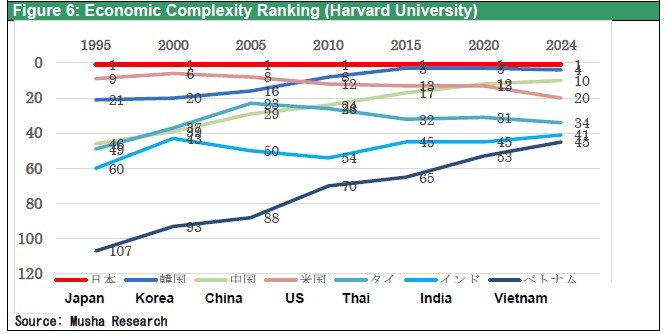
Source: Compiled by Musha Research based on data from Harvard University’s Growth Lab
This is believed to indicate a fertile environment for creating new products, even in the realm of AI-related hardware. A prime example is the food manufacturer Ajinomoto, which holds the world’s top market share in ABF—an insulating material used in semiconductor packaging substrates for AI—and is benefiting from demand for cutting-edge packaging technologies such as CoWoS. Many more such companies are likely to emerge in the future.
(2) The Bottleneck of the AI Era That Has Come to Light: Hardware
Demand Accelerated by Astonishing Agent AI
In the first half of 2026, the economy and markets were thrown into turmoil by the speed and scale of AI’s penetration. AI demand expanded at an unexpected pace, forcing us to recognize that hardware is the bottleneck in AI systems. No one could have predicted that semiconductors—particularly memory—would face such severe shortages and supply constraints.
A Surplus of Computer Engineers and a Memory Shortage
The evolution of AI from a learning machine to an inference machine—and its transformation from a tool into an agent capable of independently performing tasks—triggered an explosion in demand. In particular, the advanced AI capabilities announced by Anthropic led to massive layoffs by replacing existing SaaS (business software). Meanwhile, hardware supply shortages have worsened. In particular, as AI has become an inference machine requiring high-speed processing of massive amounts of data, demand for memory chips has surged. This has resulted in a simultaneous surplus of computer engineers and a shortage of memory chips. The sense of scarcity extends widely to materials for semiconductor packaging, components, and power and cooling equipment for data centers.
This sense of scarcity regarding AI-related hardware is likely to persist over the long term.
This is because the dramatic increase in AI productivity we saw earlier will continue to create explosive demand, while productivity growth in hardware is far lower, meaning supply is likely to lag behind the increase in demand. Semiconductor technology is now increasingly concentrated among a small number of companies, including manufacturers, equipment makers, and materials and components suppliers—and a seller’s market appears set to persist for the long term. To alleviate this supply-demand squeeze—where companies are buying up production lines three years in advance—a slowdown in AI demand would be necessary, but that seems unlikely.
The key point is this fact: “While AI-driven value creation is achieved through algorithms in cyberspace, access to that creation must pass through the narrow gateway of semiconductor hardware.” The winners of the AI era will be not only the model providers and hyperscalers that dominate cyberspace, but also semiconductor companies—a development that works to Japan’s advantage, given its heavy reliance on hardware.
Figure 8: Rapid Increase in AI Inference Workloads (From Kioxia Investor Presentation Materials)
The Fallacies of the “AI Bubble” Theory
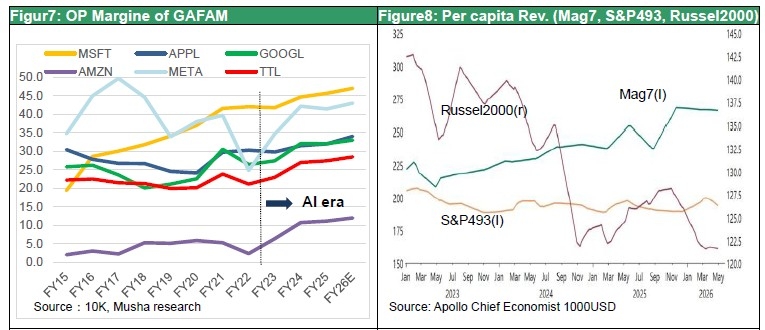
Based on this analysis, it becomes clear that the widely touted “AI bubble” theory has two flaws. First, it may be underestimating the explosive growth in AI demand and the resulting future revenue growth. While calculations show that hyperscalers’ massive investments will immediately drive-up future costs, no calculations have been made regarding the revenue these investments will generate, which is unfair. The rise in GAFAM’s operating profit margins (Figure 7) and the increase in M7 per-capita revenue (Figure 8) clearly demonstrate that the AI revolution is significantly boosting profits for hyperscalers.
Second, they overlook the fact that the price increases for AI-related hardware, such as semiconductors, will persist over the long term because the root cause lies in the disparity in production characteristics between hardware and software.
Specifically, productivity gains in software—such as models and algorithms—are remarkably rapid, immediately leading to a rapid increase in supply capacity. This has also led to the tragedy of the decline of SaaS. On the other hand, for computing resources (i.e., hardware) such as semiconductors and data centers, even with substantial increases in investment, the growth in supply capacity remains slower than that of software. Since this disparity in productivity growth rates is expected to persist, the sense of hardware shortages is likely to become entrenched over the long term.
Based on the above analysis, we can conclude that 1) Kioxia’s sharp rise in stock price is not a temporary phenomenon but is sustainable, and 2) the semiconductor industry is highly likely to surpass traditional industries—such as Toyota’s automotive sector and Mitsubishi UFJ Bank’s financial services—to become Japan’s leading industry.
The semiconductor industry may become the new driving force of Japan’s economic growth in the AI era.